



How to Reduce Condensation on Windows at Home
Learn how to reduce condensation on windows with practical ventilation, heating and humidity advice that protects your Irish home from mould and dampness.


A bedroom that smells stale in the morning, condensation gathering on windows, or mould returning after redecorating are not problems to guess at. Air quality testing vs monitoring is about choosing the right evidence for the problem: a detailed snapshot of what is in the air now, or a record of how indoor conditions change over time. For homeowners, landlords and building professionals, that distinction can prevent wasted work and lead to a ventilation solution that actually performs.
Air quality testing is a focused assessment carried out at a particular point in time. It can measure factors such as carbon dioxide (CO2), relative humidity, temperature, airborne particles and, where required, other pollutants. It answers questions such as: Is this room receiving enough fresh air? Is humidity currently too high? Is there evidence of poor air quality during occupancy?
Air quality monitoring tracks selected conditions continuously or at regular intervals over days, weeks or longer. Rather than one result, it provides a pattern. A monitor may show that CO2 rises sharply in a closed bedroom overnight, humidity spikes after showers, or conditions deteriorate only when a meeting room is full.
Neither approach is automatically better. Testing offers a professional diagnostic point of reference, while monitoring reveals timing, frequency and behaviour. The right choice depends on the property, the symptoms and whether the issue is straightforward or intermittent.
Testing is often the right starting point where there is a clear concern that needs an informed response. This may include visible mould, persistent condensation, musty odours, occupant complaints, or concern that a new or existing ventilation system is not doing its job.
For a homeowner, a targeted assessment can help separate a ventilation issue from other building defects. Damp patches are not always caused by condensation, and fitting more extraction will not resolve a leak, defective insulation detail or penetrating damp. Good diagnosis protects the property owner from spending money on the wrong fix.
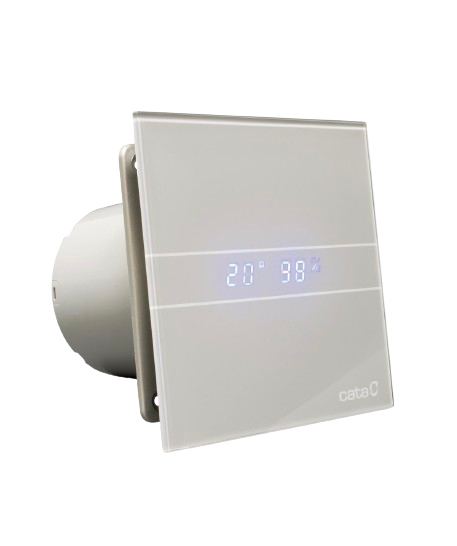
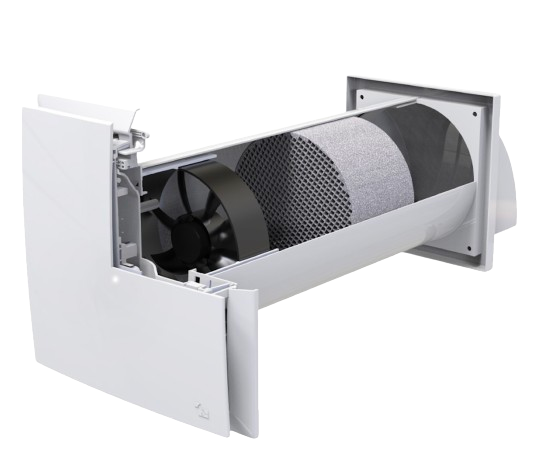
Testing is also valuable after ventilation work has been completed. A new extractor fan, single-room heat recovery unit or centralised heat recovery system should not be judged only by whether it switches on. Airflow performance, extraction rates and system balance matter. For projects subject to Irish Building Regulations, measured and documented commissioning is a key part of demonstrating that a system has been installed and set up correctly under TGD F-2022.
In commercial settings, testing can support an investigation following complaints about stuffiness, odours or comfort. It gives facilities managers and employers a clearer basis for deciding whether the next step is airflow balancing, filter maintenance, changes to operating hours or a wider ventilation upgrade.
A properly planned test can identify poor current conditions and reveal whether ventilation performance appears inadequate at the time of assessment. It can also establish a useful baseline before remedial work begins.
However, it cannot capture every possible scenario. A living room tested during a quiet afternoon may look acceptable, then become humid and poorly ventilated during a busy family evening. A classroom or office may only experience high CO2 at peak occupancy. That is where monitoring earns its place.
Monitoring is particularly useful for problems that come and go. If mould appears mainly through winter, if a bathroom remains damp after morning showers, or if occupants report headaches only on busy workdays, a single visit may not reflect the worst conditions.
A monitor records the relationship between occupancy, moisture production, heating, outdoor weather and ventilation use. CO2 is commonly used as an indicator of how well a space is being ventilated relative to the number of people in it. It is not a measure of every pollutant, but a sustained rise can indicate that fresh-air provision is not keeping pace with occupancy.
Relative humidity is equally helpful in homes. Cooking, showering, drying clothes indoors and even sleeping all add moisture to the air. When that moisture repeatedly reaches cold surfaces, condensation and mould risk increase. Monitoring can show whether humidity is briefly elevated and clearing as it should, or remaining high for hours because extraction is insufficient, windows stay closed or the system is not being used correctly.
For landlords and property managers, monitoring can be useful where there is an ongoing dispute about condensation or mould. It creates a more objective picture than assumptions about tenant behaviour or building performance. The results still need sensible interpretation, though. Opening windows, using extractor fans, indoor clothes drying and heating patterns all affect readings.
A sensor does not move air. It cannot correct undersized ductwork, blocked grilles, poor fan settings or an unbalanced heat recovery system. It can flag a problem and help verify improvement, but it must be followed by practical action.
Likewise, a low reading at one monitor does not prove that every room is healthy. Sensor placement matters. A device near an open window, supply vent or external door may not represent conditions where people sleep, work or spend most of their time.
The most effective route is often testing first, monitoring second, or both together. The decision should reflect the building and the purpose of the assessment.
A homeowner with obvious bathroom condensation and a noisy, ineffective fan may need an airflow assessment and a correctly sized replacement system. The issue may be clear enough that extended monitoring adds little value. By contrast, a family dealing with recurring bedroom mould despite using their extractor fans may benefit from monitoring overnight CO2 and humidity, alongside a review of background ventilation and heating patterns.
For a new build, renovation or multi-unit development, professional testing and commissioning should be built into the project rather than treated as a final administrative task. Commissioning confirms that installed equipment delivers the intended airflow, while balancing ensures that centralised systems distribute supply and extract air as designed. This protects both compliance and real-world comfort.
Commercial clients may require a more structured programme. Testing can investigate a specific complaint, while ongoing monitoring helps a facilities team manage changing occupancy and operating conditions. A lightly used office and a fully occupied training suite do not place the same demand on a ventilation system.
It is tempting to focus on one reading, especially CO2, but healthy indoor air depends on several connected factors. Humidity, temperature, ventilation rates, occupancy and the condition of the system all influence comfort and mould risk.
High humidity with normal CO2 may point towards moisture-heavy activities or inadequate local extraction in kitchens and bathrooms. High CO2 with normal humidity can indicate that occupied rooms need more fresh air, particularly bedrooms, offices and meeting spaces. Poor comfort with acceptable readings may lead to checks of filters, air distribution, draughts, noise or heating control.
This is why professional interpretation matters. A result should lead to a clear recommendation, not a generic instruction to open windows more often. In many properties, relying on open windows is impractical during cold or wet weather, in noisy locations, or where security is a concern. Purpose-designed mechanical ventilation provides more consistent airflow without making daily life depend on perfect habits.
The value of testing or monitoring lies in what happens next. If readings show high humidity after showers, the solution may be a correctly specified extractor fan with effective ducting and controls that continue running long enough to clear moisture. If bedrooms show poor overnight ventilation, a single-room heat recovery ventilation unit or an improved whole-home approach may be appropriate.
Where a centralised heat recovery system is installed, commissioning and balancing are essential. Even good equipment can underperform when duct runs, valve settings or fan speeds are wrong. The objective is not simply to fit a system, but to deliver the airflow the building and its occupants require.
PureAir Solution combines air quality assessment with ventilation supply, installation, commissioning and certification, helping property owners move from evidence to a practical remedy. That joined-up approach is especially valuable when mould prevention, energy efficiency and compliance all need to be considered together.
If you are deciding between testing and monitoring, start with the question you need answered. A one-off concern may need a professional assessment now. A pattern that only appears overnight, at peak occupancy or during colder months may need data over time. The right information makes it far easier to create a home or workplace where people can breathe clean and live healthy.
Learn how to reduce condensation on windows with practical ventilation, heating and humidity advice that protects your Irish home from mould and dampness.

Find the best ventilation system for apartments, from extractor fans to heat recovery, with practical guidance on mould, comfort and compliance at home.

Find the best ventilation upgrades for rentals in Ireland, from quiet extractor fans to heat recovery systems, with clear advice for landlords and tenants.