



Best Ventilation Solution for Damp and Mould
Find the best ventilation solution for damp and mould, from extractor fans to heat recovery, with practical advice for healthier Irish homes every day.


A rental that smells fresh on viewing day can still have a moisture problem waiting behind a wardrobe, in a cold corner, or above the shower. The best ventilation upgrades for rentals do more than remove odours: they control humidity at source, protect the fabric of the property and help tenants live in cleaner, healthier air.
For landlords and property managers, the right answer is rarely simply opening a window. Windows depend on occupant behaviour, can create security concerns, and are not a reliable way to clear moisture after showers, cooking or drying clothes indoors. Effective ventilation is designed around how the property is actually used, from a single damp bathroom in a flat to a whole-house solution in a renovated rental home.
Mould is a warning sign, not the underlying problem. It appears when humid air meets cold surfaces and remains there long enough for condensation to form. Wiping it away without improving extraction or airflow may make a room look better temporarily, but it does not prevent it returning.
Before choosing an upgrade, assess where and when moisture is produced. Bathrooms, kitchens, utility rooms and ensuite shower rooms should be the first focus. Also consider bedrooms where occupants dry laundry, small flats with limited opening windows, and older homes with cold external walls. A professional air quality and airflow assessment can identify whether the issue is inadequate extraction, poor background ventilation, blocked existing ducts, or a wider imbalance through the property.
For a landlord, this investigation matters. It helps distinguish a one-room defect from a whole-property need, preventing money being spent on equipment that cannot solve the actual cause.
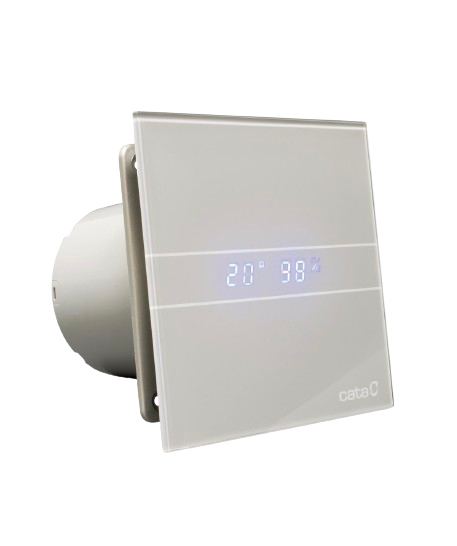
A modern extractor fan is often the most cost-effective first upgrade in a rental. It removes moist air directly from the bathroom before that moisture migrates into hallways, bedrooms and colder areas of the home.
Humidity-sensing models are particularly suitable for rentals because they switch on automatically when moisture rises. The fan continues running until the humidity reduces, rather than relying on a tenant to use a pull cord or leave a switch on. Timer overrun fans can also work well where humidity control is straightforward, but they need to be set for the room and its typical use.
The details matter. A fan should be correctly sized, ducted with an appropriate route to the outside and commissioned to confirm it is achieving the required airflow. A powerful fan with long, poorly installed flexible ducting may be noisy and still underperform. In many occupied properties, a quiet fan is more likely to be left operating as intended.
A bathroom fan should generally extract close to the source of steam, while allowing replacement air to enter the room. If the door is tightly sealed with no undercut or transfer path, extraction performance can suffer. In a shower room without an external wall, a suitable duct route and professional installation are essential.
Cooking produces water vapour, grease and airborne particles. Recirculating cooker hoods can reduce some cooking odours and capture grease, but they do not remove humid air from the property. For rentals with repeated condensation around kitchen windows or mould near ceilings, extraction to the outside is usually the more meaningful improvement.
A properly ducted kitchen extractor should be selected for the layout, cooking style and duct run. Short, straight duct routes generally perform better than long routes with multiple bends. The external grille or terminal must also be installed correctly to prevent weather ingress while allowing air to discharge freely.
Kitchen extraction needs a practical conversation with tenants. Encouraging occupants to use the fan whenever they cook, especially when boiling or frying, supports the system. But good design should not rely on perfect habits. A well-specified system should make the healthy choice easy.
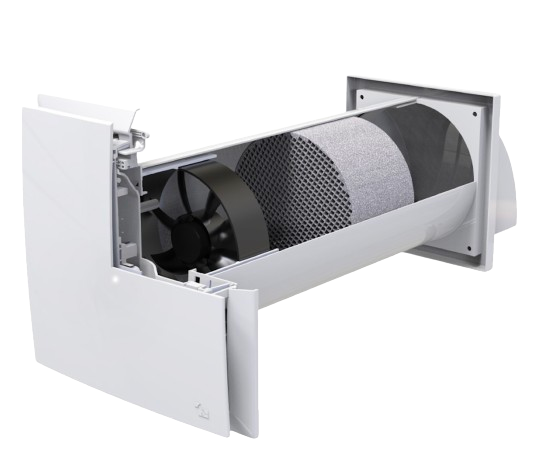
Single-room heat recovery ventilation is one of the best ventilation upgrades for rentals where mould, stale air or condensation is concentrated in a bedroom, sitting room or home office. These units continuously bring in filtered fresh air while extracting stale air, recovering heat from the outgoing air to reduce unnecessary heat loss.
They can be a strong option for older rental homes, flats and targeted refurbishment projects where installing a full ducted system would be disruptive. A unit installed in the room with the greatest problem can provide controlled background ventilation without requiring occupants to leave windows open in poor weather.
There are trade-offs. Core drilling through an external wall is required, and the unit must be positioned carefully for access, noise and suitable air circulation. Tenants should also understand that filters need periodic maintenance. For the right room, however, single-room heat recovery can provide a major improvement in comfort and air freshness while helping to manage moisture.
Where a rental property is undergoing a substantial renovation, extension or energy upgrade, a centralised heat recovery ventilation system may offer the most complete long-term solution. It extracts humid, stale air from wet rooms and supplies filtered fresh air to bedrooms and living areas through a duct network.
This approach is especially relevant for airtight homes. As insulation and draught-proofing improve, uncontrolled leakage reduces. That is good for energy performance, but the home still needs planned fresh-air supply and moisture removal. Heat recovery ventilation allows the property to retain much of the heat that would otherwise be lost through uncontrolled ventilation.
Centralised systems need early design. Duct routes, ceiling voids, access for maintenance, terminal positions and room-by-room airflow rates all need consideration. They should be installed, balanced and commissioned properly, with documentation where required. This is not usually the first choice for a minor damp complaint in one bathroom, but it can be the right investment for a full renovation or a multi-unit development.
Extract fans cannot work efficiently if there is no route for fresh air to replace what is removed. This is where background ventilation, such as correctly specified wall vents or window ventilators, can be part of a complete rental strategy.
These openings are sometimes closed because occupants worry about draughts, traffic noise or heat loss. That concern is understandable. The goal is not to create a cold, uncomfortable property, but to provide controlled airflow that works alongside extraction. Heat recovery solutions may be more appropriate where maintaining warmth and reducing external noise are priorities.
Any change to background ventilation should be considered alongside the property’s heating, insulation and existing air paths. A flat with intermittent extract and sealed-up vents will behave very differently from a detached home with open fireplaces or natural leakage.
The product is only one part of the result. Incorrect duct sizing, crushed flexible ducting, poorly placed terminals, missing backdraught protection and unbalanced airflow can all reduce performance. A fan that is loud, ineffective or constantly tripping a tenant’s patience is unlikely to deliver lasting mould prevention.
For rental owners, professional installation also brings clarity. The system can be selected for the property, fitted cleanly, tested for airflow and commissioned. For renovation, development and more complex projects, design and certification should align with relevant Irish Building Regulations and Technical Guidance Document F, including TGD F-2022 where applicable.
PureAir Solution supports landlords, homeowners and property professionals with product supply, nationwide installation, airflow testing, balancing and certification. That joined-up approach is particularly useful when the issue involves more than replacing a fan.
For many properties, the sensible route is staged. First, inspect existing fans and ducts. A blocked grille, failed fan motor or disconnected duct can be a simple fix. Next, improve extraction in bathrooms and kitchens, then review whether bedrooms and living spaces have adequate background ventilation.
If mould or condensation persists in a specific habitable room, single-room heat recovery is worth assessing. If the property is being comprehensively refurbished, centralised heat recovery ventilation should be considered at the design stage rather than added as an afterthought.
Keep records of inspections, installation and commissioning, and give tenants clear, simple guidance on using the system. This protects the property, supports constructive conversations if issues arise, and shows that indoor air quality has been taken seriously.
A well-ventilated rental is not a luxury feature. It is a practical safeguard for the building and the people who call it home. The most effective upgrade is the one that matches the property, is installed correctly and continues working quietly in the background every day.
Find the best ventilation solution for damp and mould, from extractor fans to heat recovery, with practical advice for healthier Irish homes every day.

Learn how a smart extractor fan helps prevent bathroom mould by responding to humidity, clearing damp air and protecting your home, health and finishes.

Core drilling for air conditioning & portable AC wall ports: clean, weatherproof openings for safer cooling, correct sizing and professional installation.