



How to Reduce Condensation on Windows at Home
Learn how to reduce condensation on windows with practical ventilation, heating and humidity advice that protects your Irish home from mould and dampness.


Condensation running down bedroom windows on a cold morning is not just a nuisance to wipe away. It is often a sign that moist, stale air is being trapped inside the building. The most valuable fresh air ventilation benefits are felt where people spend the most time: in bedrooms, bathrooms, kitchens, living spaces and busy workplaces. A correctly designed system removes moisture and pollutants while bringing in filtered outdoor air, helping occupants breathe clean and live healthy.
For homeowners, landlords and property managers, ventilation is not simply another building service. It is a practical defence against recurring mould, damp smells, uncomfortable rooms and damage to finishes. For builders and developers, it is also a matter of building performance and compliance.
Fresh air ventilation replaces used indoor air with fresh outdoor air in a controlled way. In modern, well-insulated homes, this matters more than ever. Better windows, doors and insulation reduce draughts and heating loss, but they also reduce the accidental airflow older properties once relied on.
Opening windows can help, particularly after cooking or showering, but it is inconsistent. Windows are often kept shut because of weather, security, road noise, pollen or heat loss. A purpose-designed ventilation system works when occupants are asleep, away from home or simply unable to open a window.
Everyday living produces substantial moisture. Showers, cooking, drying clothes indoors and even breathing all add water vapour to the air. When that warm, humid air meets a cold surface such as glazing, an external wall or a poorly insulated corner, it turns into condensation.
Effective extraction in wet rooms and kitchens removes moisture at source. Whole-house ventilation then provides a consistent route for humid air to leave the property. This helps keep relative humidity at a more manageable level, reducing the conditions that allow condensation and surface mould to develop.
Ventilation is not a cure for a leaking roof, rising damp or a plumbing fault. Those defects need to be repaired directly. But where mould is caused by day-to-day moisture and inadequate airflow, a properly specified ventilation system can make a lasting difference.
Indoor air can contain moisture, cooking particles, cleaning-product fumes, carbon dioxide, odours, dust and allergens. In homes with pets, young children or occupants who suffer from allergies, the difference made by regular air exchange can be particularly noticeable.
Bedrooms deserve special attention. A closed bedroom occupied for eight hours can become stuffy by morning, especially in a newer, airtight home. Supplying fresh air and extracting stale air supports a more comfortable sleeping environment without relying on an open window all night.
The same principle applies in offices, retail spaces and shared accommodation. When rooms feel stuffy, the issue is often not a lack of heating or cooling but insufficient fresh-air provision. Good ventilation supports a more pleasant environment for staff, visitors and residents.
A common concern is that ventilation will make a home cold or increase heating bills. Basic extractor fans do remove warm air, so the system choice and installation quality matter. In bathrooms and kitchens, efficient intermittent extract ventilation may be the right solution. In properties with wider condensation or air-quality issues, a continuous or heat recovery approach may be more suitable.
Heat recovery ventilation systems transfer heat from outgoing stale air to incoming fresh air without mixing the two air streams. They can provide steady ventilation with far less heat loss than leaving windows open for extended periods. The benefit is strongest in well-insulated, reasonably airtight buildings where the system has been designed, installed and commissioned correctly.
There is a trade-off: heat recovery systems require suitable duct routes, regular filter care and professional balancing. They are not automatically the best answer for every older house. A single-room heat recovery unit can be an effective alternative where installing a full ducted system would be disruptive or impractical.
The right solution depends on the building, the symptoms and how the space is used. A small bathroom with no opening window may only require a correctly sized, humidity-controlled extractor fan. A flat with mould in bedrooms and condensation throughout may need continuous background ventilation or decentralised heat recovery units. A new build or major renovation may be best served by a centralised mechanical ventilation with heat recovery system designed from the outset.
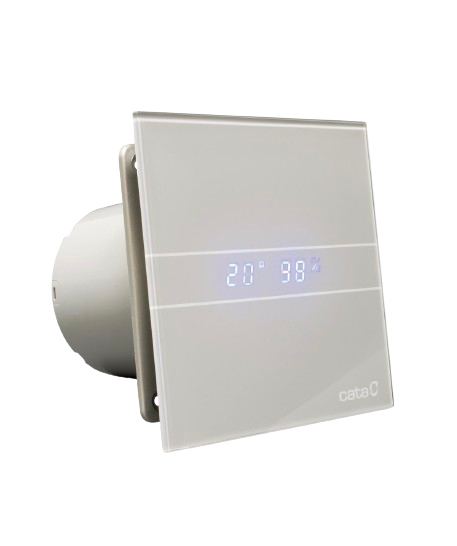
Extractor fans are essential in bathrooms, utility rooms and kitchens. Their job is straightforward: remove humid or polluted air close to where it is produced. However, performance is affected by more than the fan on the ceiling or wall. Duct length, bends, outlet position, backdraught protection and the available replacement air all influence the result.
A powerful fan connected to poor ducting may be noisy yet underperform. Equally, a fan that stops immediately when the light goes off may not run long enough to clear moisture after a shower. Timer, humidistat and continuous-running options can provide more reliable control, depending on the room and occupancy.
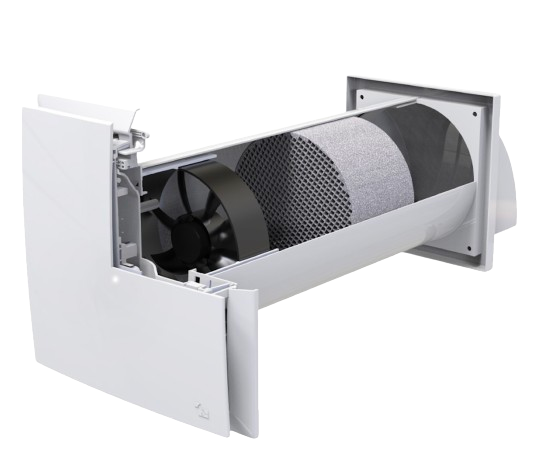
Single-room heat recovery ventilation units are often well suited to existing homes, bedrooms, home offices and individual problem rooms. They extract stale air and supply tempered fresh air through an external wall, recovering heat in the process. This can make them a practical option where whole-house ductwork is not feasible.
Placement still matters. A unit should be selected for the room volume and intended airflow, installed through a suitable external wall, and positioned to avoid creating uncomfortable draughts. Core drilling and professional installation help ensure a neat finish and correct operation.
Centralised heat recovery systems provide a planned supply-and-extract arrangement across the property. Fresh air is normally supplied to living rooms and bedrooms, while stale air is extracted from bathrooms, kitchens and utility spaces. This gives a consistent, whole-home approach to moisture and air quality.
These systems need careful design. Duct sizes, valve positions, acoustic considerations and airflow rates cannot be treated as an afterthought. Once installed, the system should be commissioned and balanced so each room receives the intended airflow rather than simply relying on a unit being switched on.
Ventilation products do not deliver their promised performance in isolation. A system can be technically good but fail to solve condensation if it is undersized, poorly ducted, incorrectly set up or never maintained. This is why professional design, installation and testing are particularly valuable for significant upgrades, new builds, rental properties and commercial projects.
For Irish projects, compliance with TGD F-2022 and relevant Building Regulations should be considered from the design stage. Airflow testing, balancing and certification provide evidence that the installed system is performing as intended. This is useful for developers and builders managing sign-off, but it also gives homeowners and landlords confidence that the work has addressed the actual ventilation requirement.
PureAir Solution combines equipment supply with installation, commissioning and certification across Ireland, helping customers avoid the gap between buying a product and achieving a working ventilation solution.
Once installed, ventilation should be treated like any other essential home system. Filters in heat recovery units need checking and replacing in line with the manufacturer’s guidance. External grilles should be kept clear, and extractor fan covers should be cleaned so dust does not restrict airflow.
Occupants also need to use the system as intended. Blocking vents because they feel unfamiliar, switching off continuous ventilation to save electricity, or drying large amounts of laundry in an unventilated room can undermine results. The running cost of an efficient system is usually modest compared with the cost and disruption of repeated mould treatment, redecorating or moisture damage.
If condensation or mould continues after improvements, investigate rather than guessing. An air-quality assessment and airflow test can identify whether the issue is humidity, inadequate extraction, poor background ventilation, a cold bridge or a separate building defect.
Fresh air is not a luxury feature reserved for new homes. It is a basic part of a healthy, comfortable building. When ventilation matches the property and is installed properly, the change is often quiet but meaningful: drier rooms, cleaner air and a home that feels better to live in every day.
Learn how to reduce condensation on windows with practical ventilation, heating and humidity advice that protects your Irish home from mould and dampness.

Find the best ventilation system for apartments, from extractor fans to heat recovery, with practical guidance on mould, comfort and compliance at home.

Find the best ventilation upgrades for rentals in Ireland, from quiet extractor fans to heat recovery systems, with clear advice for landlords and tenants.