



How to Reduce Condensation on Windows at Home
Learn how to reduce condensation on windows with practical ventilation, heating and humidity advice that protects your Irish home from mould and dampness.


A bathroom fan that only runs when someone remembers to switch it on will often miss the moment it is needed most: the 30 minutes after a shower, when warm moisture is settling on cold tiles, mirrors and windows. This humidity sensor extractor fan review focuses on what genuinely makes a difference in Irish homes, flats and rental properties – not just what looks good on a product label.
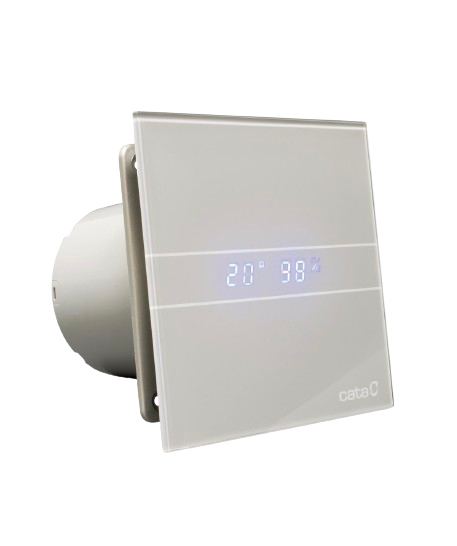
A humidity-sensing extractor fan can be an excellent first line of defence against condensation and mould. It detects rising moisture levels and runs automatically, helping to remove humid air even when the bathroom is unoccupied. The right fan, properly installed and commissioned, offers quieter operation, healthier indoor air and fewer damp-related repairs.
A humidity sensor, often called a humidistat, measures the relative humidity in the air. When the level rises above its set point, the fan switches on. Once humidity drops back to the selected level, the fan continues for a short period or turns off, depending on its controls.
That sounds simple, but it solves a common household problem. Steam does not disappear when the shower stops. Without effective extraction, it travels to cooler surfaces and condenses. Over time, that moisture can damage paintwork, swell timber finishes, blacken silicone sealant and support mould growth around windows and external walls.
Automatic operation is particularly useful in family bathrooms, en suites, rented homes and commercial washrooms, where ventilation habits vary from person to person. It also avoids relying on a light switch connection, although a fan can be wired to work with both a humidistat and a manual boost option.
A fan is not a cure for every damp problem. Water ingress, leaking pipes, a failed roof detail or poor insulation need separate investigation. However, where everyday bathing, drying towels and normal occupancy are raising indoor moisture, reliable extract ventilation is essential.
The best fan is not always the one with the highest claimed airflow or the lowest purchase price. A useful review starts with the room, the duct route and the reason moisture is building up.
Airflow is usually shown in litres per second or cubic metres per hour. It is a vital figure, but it must be considered alongside the installation. A powerful fan connected to a long, crushed flexible duct, several sharp bends or a restrictive external grille may deliver far less air movement than expected.
For a standard bathroom, a quality intermittent extractor should be selected and installed to meet the required extract rate for the space and building type. In a kitchen, utility room or busy communal area, the ventilation requirement may be different. For refurbishment and new-build work, the design should also be considered against TGD F – 2022 and the applicable Irish Building Regulations.
Short, straight, correctly sized rigid ducting usually gives a better result than an unnecessarily complicated route. Where ducting passes through a cold attic, it should be insulated to reduce the risk of condensation forming inside the duct. A professional installation considers these details before the fan is chosen.
A humidity sensor should react to shower steam without running all day because of normal background humidity. Many fans offer an adjustable humidistat, commonly within a range such as 60 to 90 per cent relative humidity. This lets the installer tailor the fan to the room.
Set too low, the fan may run frequently during wet weather or when clothes are drying indoors. Set too high, it may not start soon enough to protect the room after a shower. Bathrooms with no opening window, cold external walls or regular mould staining may benefit from a more responsive setting, provided the fan and duct route are suitable.
Some modern units use more advanced sensing to respond to a rapid rise in humidity rather than a fixed level alone. This can be helpful in Ireland’s naturally changeable climate, but it does not remove the need for correct commissioning. A well-set basic humidistat is often more effective than a sophisticated unit fitted poorly.
Noise matters because a fan that disturbs sleep or conversation is more likely to be isolated, switched off or poorly tolerated. Look at the sound level in decibels, but remember that duct turbulence and installation quality can make a quiet fan seem louder in practice.
There is also a trade-off between noise and extraction. The quietest setting may not provide enough airflow for a heavily used bathroom. Some fans offer low-speed continuous ventilation with a humidity-triggered boost. This approach can provide steadier air quality, though it requires careful specification and may be better suited to certain properties than others.
Run-on timers are useful too. They allow the fan to keep extracting after the light is turned off, but a humidity sensor is more responsive because it runs according to the actual moisture remaining in the room. In many homes, the strongest arrangement is an adjustable humidistat with an appropriate overrun period and a manual boost facility.
When the fan is off, cold air should not be freely pulled back through the duct. A backdraught shutter can help reduce this, particularly where the external wall is exposed to wind. However, shutters must open easily and should not create excessive resistance to extracted air.
The external grille or roof terminal also matters. It needs to discharge air safely outdoors, resist weather entry and remain accessible for inspection. Extracting moist air into an attic, ceiling void or poorly ventilated garage is not an acceptable solution. It simply moves the condensation problem to a hidden and potentially more damaging location.
A humidity sensor fan is a sensible choice for many bathrooms, but it has limits. If mould is appearing in bedrooms, behind furniture or on cold walls throughout the property, the issue may be wider than bathroom extraction. Limited background ventilation, high occupancy, indoor clothes drying and inadequate whole-house airflow can all contribute.
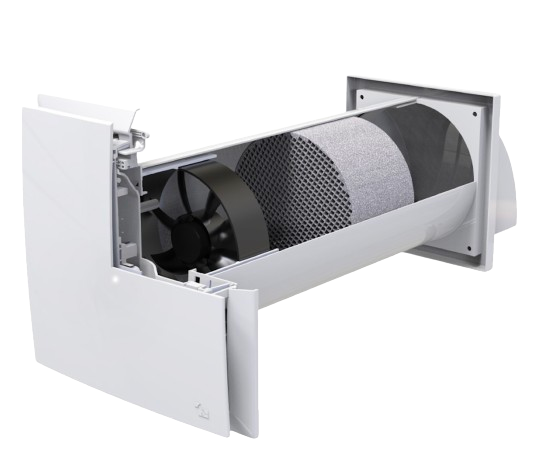
In those situations, a broader ventilation assessment may identify the need for additional extract points, continuous mechanical ventilation or a heat recovery solution. Heat recovery ventilation can remove stale, humid air while supplying filtered fresh air, helping to manage moisture without the same heat loss associated with uncontrolled window opening.
Landlords and property managers should be especially careful not to treat a fan replacement as a paper-only fix. If there is a persistent condensation complaint, assess the moisture sources, room temperatures, airflow route and evidence of mould. Clear records of design, installation, airflow testing and commissioning are valuable for both occupant wellbeing and property protection.
Even an excellent fan cannot overcome an undersized core hole, blocked duct, poor electrical connection or an air path with nowhere for replacement air to enter. As air is extracted from a bathroom, fresh air must be able to move into it – typically through an adequate door undercut or another designed transfer path.
Electrical work should be completed safely by a qualified professional, particularly in bathroom zones. The fan’s IP rating, voltage, isolation requirements and location relative to the bath or shower all need to be suitable for the installation. These are not optional details, especially in rental, multi-unit and commercial settings.
After fitting, check the fan in real conditions. Run a shower, close the door and confirm that the fan starts when moisture rises. Check that it continues to extract effectively, that the external terminal is discharging air and that there is no rattling, droning or visible condensation in the duct route. Where compliance is required, airflow testing and formal commissioning provide assurance that the system is delivering the intended performance.
Choose a humidity sensor extractor fan when the main problem is intermittent moisture from showers, baths or regular bathroom use and there is a viable route to discharge outdoors. Prioritise proven airflow, low practical noise, an adjustable humidistat and ducting that supports the fan rather than restricts it.
For a small bathroom with a short wall route, a standard axial humidity fan may be entirely appropriate. For a larger room, a long duct run, a roof termination or greater resistance, an inline or centrifugal solution may perform better. The product decision should follow the ventilation design, not the other way around.
PureAir Solution can help homeowners and project teams match the fan, ducting, installation and commissioning approach to the property. The aim is straightforward: remove moisture at source, protect the building fabric and give occupants cleaner, more comfortable air to breathe.
A properly specified fan is a small component with a lasting effect. When the mirror clears faster, the room dries properly and mould stops returning, ventilation has moved from an afterthought to a practical part of a healthy home.
Learn how to reduce condensation on windows with practical ventilation, heating and humidity advice that protects your Irish home from mould and dampness.

Find the best ventilation system for apartments, from extractor fans to heat recovery, with practical guidance on mould, comfort and compliance at home.

Find the best ventilation upgrades for rentals in Ireland, from quiet extractor fans to heat recovery systems, with clear advice for landlords and tenants.