



How to Reduce Condensation on Windows at Home
Learn how to reduce condensation on windows with practical ventilation, heating and humidity advice that protects your Irish home from mould and dampness.


A cold bedroom window streaming with condensation each morning is not a cleaning problem. It is usually a ventilation problem. This single room heat recovery review looks at whether a decentralised heat recovery unit is a sensible answer for homes and flats dealing with damp air, mould risk and stale rooms – without the disruption of installing a full ducted system.
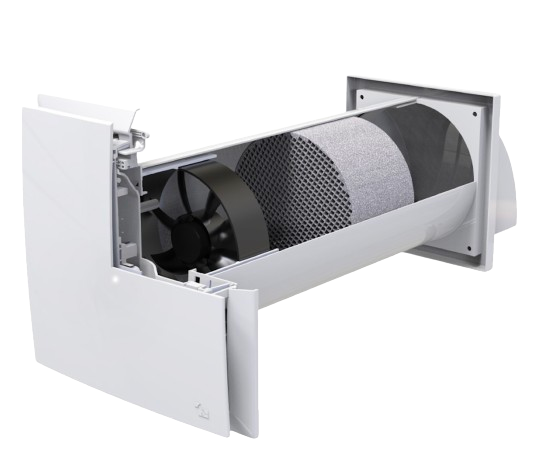
Single-room heat recovery ventilation, often called decentralised MVHR, brings fresh outdoor air into one room while extracting stale indoor air. Before the air leaves the property, its heat is transferred through a heat exchanger to warm the incoming air. The result is controlled ventilation with far less heat loss than opening windows or relying solely on an extractor fan.
For many Irish properties, particularly older homes, retrofitted bedrooms and occupied rental properties, that is a compelling proposition. But the right unit, location and installation standard matter just as much as the technology itself.
The strongest reason to choose a single-room unit is that it solves the air problem at its source. Rather than hoping that moisture will travel from a bedroom to an extractor fan elsewhere in the house, the unit continuously removes humid, stale air from the room where people sleep, dry clothes or spend long periods.
This can make a noticeable difference to morning condensation, lingering odours and that stuffy feeling in rooms kept closed for security, traffic noise or warmth. Families often find bedrooms feel fresher overnight without needing to leave a window ajar during colder weather. For landlords, better controlled airflow can help protect finishes, furnishings and window reveals from recurring surface mould.
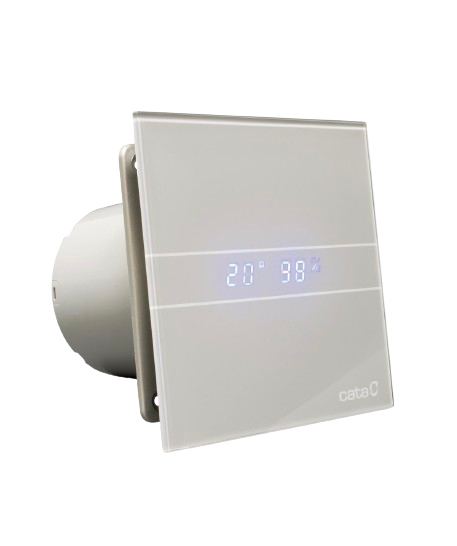
Heat recovery is the key advantage over a standard intermittent fan. A basic extractor removes air but also removes heated air, which can make occupants reluctant to use it in winter. A heat recovery unit is designed to retain much of that energy while still replacing stale indoor air with filtered fresh air. It supports comfort as well as moisture control.
Installation can also be comparatively straightforward. Most units require a core-drilled opening through an external wall, an internal controller or integrated controls, and a suitable electrical connection. There is no need to create a network of ceiling ducts through an existing property. That makes decentralised ventilation particularly practical where access is limited or a full renovation is not planned.
A single-room heat recovery unit is not automatically the answer to every ventilation issue. It works best where one room has a persistent airflow problem and has an external wall available for installation. Bedrooms, home offices, living rooms, small studios and converted spaces are common applications.
It can be particularly effective in a bedroom affected by condensation, provided the room is used normally and the system is selected to deliver the required airflow quietly. A unit installed too close to a bed, or specified without considering night-time sound levels, may be technically capable but unpopular in daily use.
Bathrooms and utility rooms need a different assessment. These rooms can generate high levels of moisture quickly, so a dedicated intermittent or continuous extract system may be the more appropriate primary solution. In a whole dwelling, the best outcome often comes from a planned approach: extract ventilation in wet rooms, controlled fresh air to habitable rooms, and properly considered transfer paths between spaces.
For new builds, major refurbishments and developments with several wet rooms, a centralised heat recovery ventilation system may offer more consistent whole-house performance. It can serve multiple rooms from one carefully commissioned system. A single-room unit is usually a targeted retrofit solution, not a substitute for designing ventilation across an entire building when regulations and building layout call for it.
The best units are designed for continuous background operation at a low speed, with a higher boost setting when needed. In practical terms, occupants should notice fresher air rather than a draught. That depends on correct sizing, careful installation and a sensible commissioning setup.
Noise deserves honest consideration. Every mechanical ventilation unit produces some sound, and external traffic noise can also travel through a poorly installed wall penetration. Product specifications should be reviewed at the intended airflow rate, not simply at the lowest advertised setting. Positioning, wall thickness, internal acoustic components and installation quality all influence the finished result.
Running costs are generally modest because these units use efficient fans, but electricity consumption is not the only figure that matters. A poorly maintained unit can lose airflow performance, while blocked filters can increase noise and reduce air quality. Filters should be checked and replaced in line with the manufacturer’s guidance and the conditions around the property. Homes near busy roads, building sites or agricultural activity may need more frequent attention.
The financial value is broader than an electricity calculation. Reducing condensation can help avoid repeated redecorating, damaged curtains, mould treatment and the discomfort that comes with damp rooms. It also allows households to ventilate more consistently without sacrificing as much of the heat they have paid to generate.
A core hole in an external wall is only the visible part of a proper installation. The unit must be fitted with the right fall or drainage arrangement where required, sealed correctly, insulated as specified and positioned to avoid unnecessary cold bridging or weather ingress. External grilles need to be secure and suitable for the location.
Airflow must also be verified. A unit may be running, yet still fail to deliver the air change the room needs if it has been incorrectly configured, obstructed or selected at too low a duty. Professional commissioning checks the installed performance rather than relying on the box specification alone.
For landlords, developers and builders, this becomes especially important where ventilation forms part of a compliance strategy. Irish Building Regulations and TGD F-2022 set expectations around ventilation performance. Depending on the scope of works, a design, airflow testing, balancing and certification may be required. Treating ventilation as an afterthought can create delays at handover and leave occupants with an expensive system that does not perform as intended.
PureAir Solution provides supply, installation, commissioning and certification support, which removes the common gap between buying a unit and knowing whether it is working correctly in the finished property.
Before buying, establish why the room has a problem. If mould appears in a corner behind furniture, check insulation, thermal bridging and how the room is heated as well as ventilation. Heat recovery ventilation can control humidity effectively, but it cannot repair a leaking roof, rising damp or an uninsulated cold surface.
Consider the room size, occupancy and use. A spare bedroom used occasionally needs a different approach from a main bedroom occupied by two people every night. Think about access to an external wall, nearby power, the location of furniture, external noise exposure and whether the building is within a protected or managed development where external changes require approval.
It is also worth asking how the unit will be controlled. A simple continuous background setting is often the most reliable approach, while humidity sensors, boost switches or smart controls can provide extra response to changing conditions. The right choice is the one occupants will understand and use, rather than a feature-heavy system left permanently switched off.
A single-room heat recovery unit is worth considering when the problem is localised, an external wall is available and the goal is healthier, more comfortable air without a major refurbishment. It is especially well suited to homes where opening windows is impractical due to cold weather, noise, security concerns or pollen.
It is less suitable when the property has widespread damp, several poorly ventilated wet rooms or a building-wide compliance requirement that calls for a designed central system. In those cases, a whole-house assessment is likely to deliver better long-term value.
The most useful next step is not to compare fan speeds in isolation. Start with the room, the moisture source and the standard of installation required. A correctly selected and commissioned heat recovery unit can turn a condensation-prone room into a fresher place to sleep, work and live – while helping protect the home for years to come.
Learn how to reduce condensation on windows with practical ventilation, heating and humidity advice that protects your Irish home from mould and dampness.

Find the best ventilation system for apartments, from extractor fans to heat recovery, with practical guidance on mould, comfort and compliance at home.

Find the best ventilation upgrades for rentals in Ireland, from quiet extractor fans to heat recovery systems, with clear advice for landlords and tenants.