



How to Reduce Condensation on Windows at Home
Learn how to reduce condensation on windows with practical ventilation, heating and humidity advice that protects your Irish home from mould and dampness.


A bathroom mirror that stays misted long after a shower is a warning sign, not just an inconvenience. If you are asking when should bathroom fans run, the practical answer is during every shower or bath and for long enough afterwards to remove the remaining humid air before it settles on cold surfaces.
That simple habit helps protect paintwork, grout, ceilings, window reveals and, most importantly, the health of the people using the room. In Irish homes, where cooler outdoor temperatures can make internal surfaces cold for much of the year, moisture control needs to be consistent rather than occasional.
For a standard intermittent extractor fan, switch it on at the start of a shower or bath, not when the room is already full of steam. Leave it running throughout, then keep it on for at least 15 to 20 minutes after you finish.
The exact time depends on the bathroom size, the amount of steam produced, how powerful the fan is and whether the door has been kept closed. A long, hot shower in a small ensuite can create enough moisture to justify a longer run-on period. If the mirror, tiles or window are still wet after 20 minutes, the room has not yet been adequately cleared.
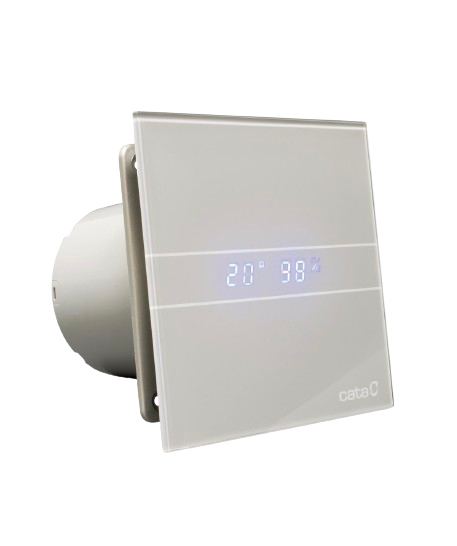
A fan with a timer overrun is often the simplest solution. It continues operating after the light is switched off, so extraction is not dependent on someone remembering to return and turn it off. Humidistat-controlled fans add another layer of protection by responding to a rise in moisture levels, including humidity created by bathing, drying towels or a busy family bathroom.
Not every bathroom fan is designed to work in the same way. Choosing the correct operating pattern matters as much as choosing the unit itself.
A conventional intermittent fan runs only when activated by a light switch, pull cord, separate switch, timer or humidity sensor. It should operate whenever moisture is being created, then continue through its set run-on period. This is common in existing homes where a bathroom has its own dedicated extract point.
The risk with a basic manually switched fan is human behaviour. If it is noisy, slow to start or inconveniently wired, people tend not to use it. A properly selected low-noise fan with timer or humidity control is far more likely to protect the room every day.
Continuous extract systems are intended to run 24 hours a day at a low background rate. They quietly remove moisture and stale air as part of the home’s normal ventilation strategy, then increase to a boost rate when the bathroom is in use.
Do not switch off a continuous system overnight or only operate it during showers. Its value lies in maintaining steady airflow throughout the home. The bathroom boost should activate through a switch, sensor or automated control, depending on the system design.
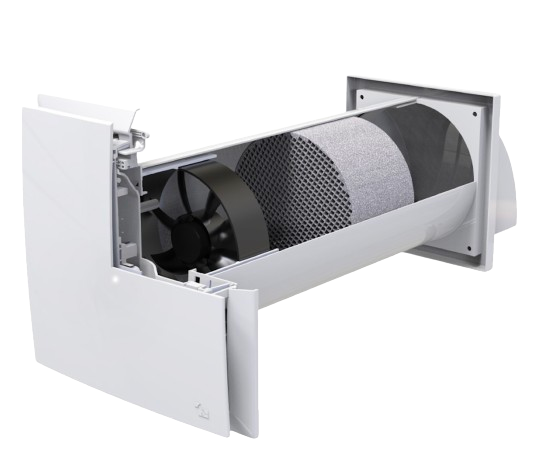
Centralised heat recovery ventilation and single-room heat recovery units are also designed for continuous operation. They replace stale, humid air with filtered fresh air while recovering heat that would otherwise be lost. In a bathroom, the system should have an effective boost mode for showering and bathing.
This approach can be especially suitable for airtight new-build homes, deep retrofits and properties with recurring condensation problems. However, it must be designed, installed and commissioned correctly. Simply fitting a unit without confirming airflow, duct routes and room requirements can leave the property under-ventilated.
Fifteen to 20 minutes is a sensible starting point for most homes, but it is not a universal cure. The aim is to remove moisture rather than to meet a timer setting. If surfaces remain visibly damp, the fan may need to run longer, or the extraction system may not be moving enough air.
In bathrooms without an opening window, or in internal ensuites with no natural ventilation, reliable mechanical extraction is even more important. These rooms should not rely on leaving the door open after showering. Opening the door simply allows humid air to migrate into bedrooms, halls and wardrobes, where it can condense on cooler surfaces.
For households with several showers in quick succession, it may be best to leave the fan running continuously through the whole period and for 20 to 30 minutes afterwards. This is more effective than repeatedly switching it off and on while moisture remains in the room.
A fan can be switched on and still fail to solve a humidity problem. Dust, a blocked external grille, poor ducting, incorrect fan sizing or failed backdraught shutters can all reduce real-world extraction.
Look beyond the sound of the motor. Persistent condensation on windows, black spotting around silicone or ceilings, peeling paint, musty smells and towels that never properly dry all suggest that moisture is lingering too long. In a well-performing bathroom, steam should begin to clear promptly and the room should return to a dry, comfortable condition after use.
A simple tissue test at the grille can indicate whether there is some suction, but it cannot confirm that the system meets its required airflow. Professional airflow testing and balancing are the reliable way to establish performance, particularly in new homes, rental properties, multi-unit developments and projects requiring certification.
A bathroom fan cannot remove air effectively if replacement air cannot enter the room. There needs to be a route for fresh air to move in, commonly through the gap beneath the bathroom door or a suitable transfer grille.
This does not mean leaving windows open all day in winter. It means ensuring the ventilation system has a planned airflow path. Sealing every gap around a bathroom door may reduce drafts, but it can also starve the extractor fan and leave humidity trapped inside.
Keep internal doors configured as intended by the property’s ventilation design. If a new floor finish, draught seal or renovation has reduced the door undercut, ask a ventilation professional to assess whether the airflow path has been compromised.
Turning the fan off as soon as the shower ends is the most common mistake. Much of the moisture released during bathing remains suspended in the air or sits on surfaces after you leave the room. The extraction period afterwards is where the fan does much of its work.
It is also unwise to disable a fan because it seems noisy. Excessive noise can point to an ageing unit, restrictive ducting, poor installation or a fan working harder than it should. Replacing or correcting the system is usually better than living with condensation and mould.
Another mistake is fitting a more powerful fan without considering the duct run. Long flexible ducting, unnecessary bends and undersized pipework can dramatically reduce airflow. A correctly specified fan with short, smooth, properly sized ducting will usually outperform a powerful unit installed poorly.
Finally, do not assume that an open window replaces mechanical ventilation. Windows can help on a mild, dry day, but they are not a dependable answer during cold or wet weather, when people are least likely to open them and condensation risk is often highest.
If mould keeps returning after cleaning, condensation spreads beyond the bathroom, or occupants notice persistent damp smells, the issue may be larger than one fan. The property could have insufficient extract capacity, missing background ventilation, poorly routed ductwork or an unbalanced whole-house system.
For landlords, developers and builders, performance matters beyond occupant comfort. Ventilation design, commissioning and certification should align with the applicable Irish Building Regulations and Technical Guidance Document F requirements for the project. Measuring airflow after installation is essential because a fan’s stated performance on the box is not the same as the airflow achieved through a real duct system.
PureAir Solution can assess the cause of poor bathroom ventilation and provide correctly specified extraction or heat recovery systems, installation, testing, balancing and certification across Ireland. The right solution should deal with the moisture source, fit the building and deliver dependable airflow rather than a temporary fix.
A dry bathroom should not depend on wiping windows each morning or constantly repainting a mould-marked ceiling. Let the fan run whenever moisture is created, give it time to finish the job, and investigate promptly if the room still does not dry out.
Learn how to reduce condensation on windows with practical ventilation, heating and humidity advice that protects your Irish home from mould and dampness.

Find the best ventilation system for apartments, from extractor fans to heat recovery, with practical guidance on mould, comfort and compliance at home.

Find the best ventilation upgrades for rentals in Ireland, from quiet extractor fans to heat recovery systems, with clear advice for landlords and tenants.